Shed Repair Done Right - Rotted Wood Out, Composite In
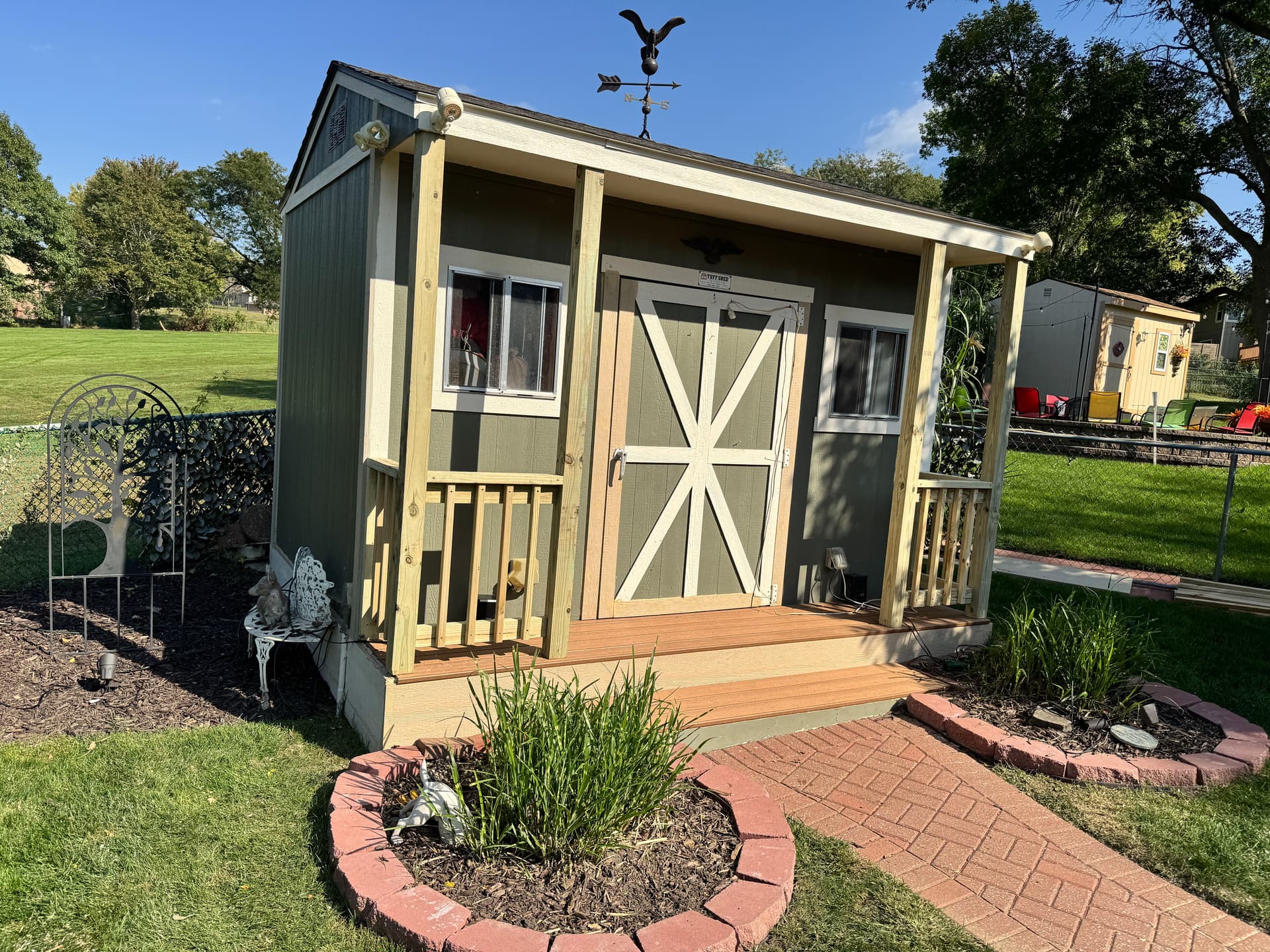
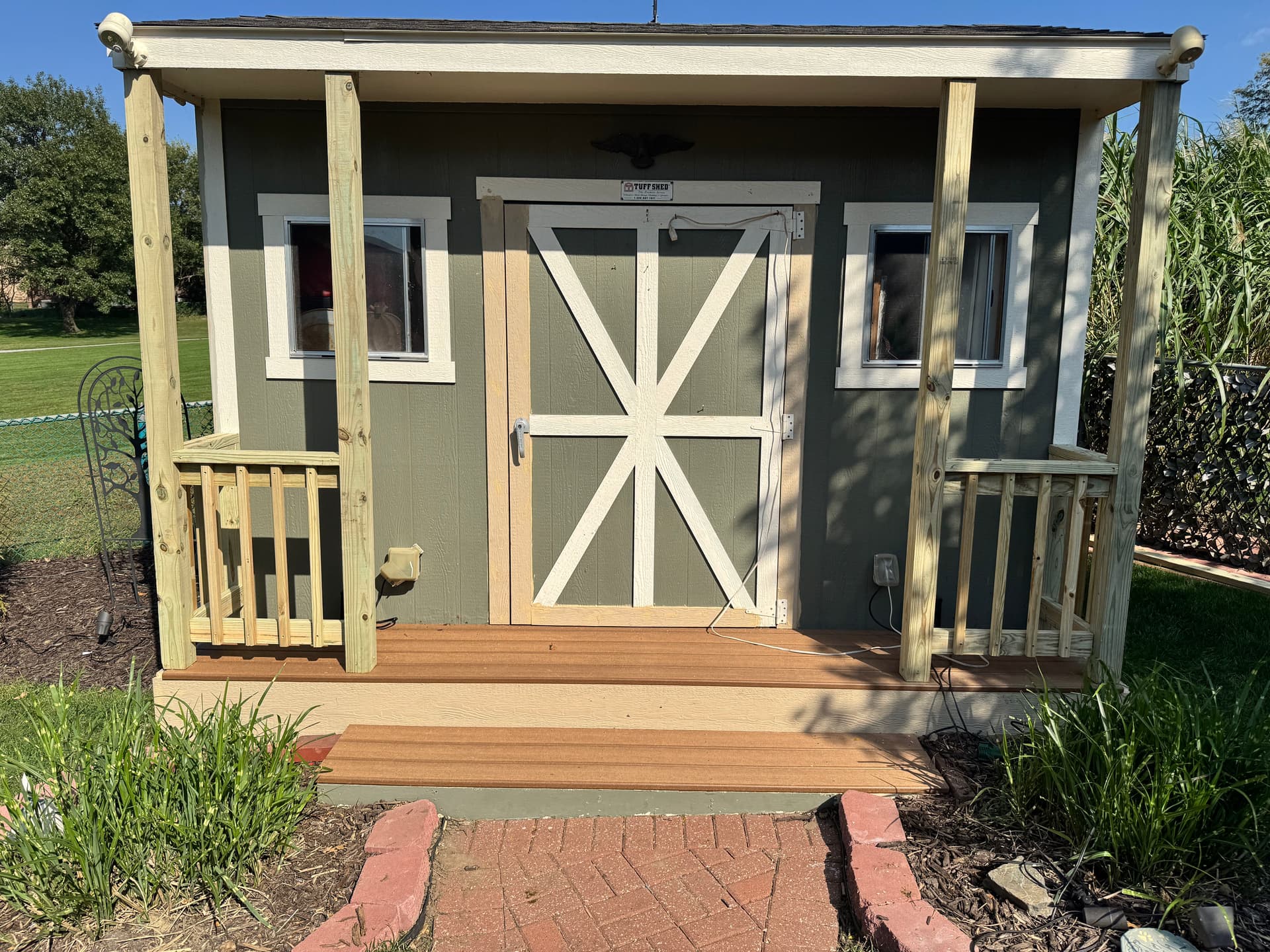
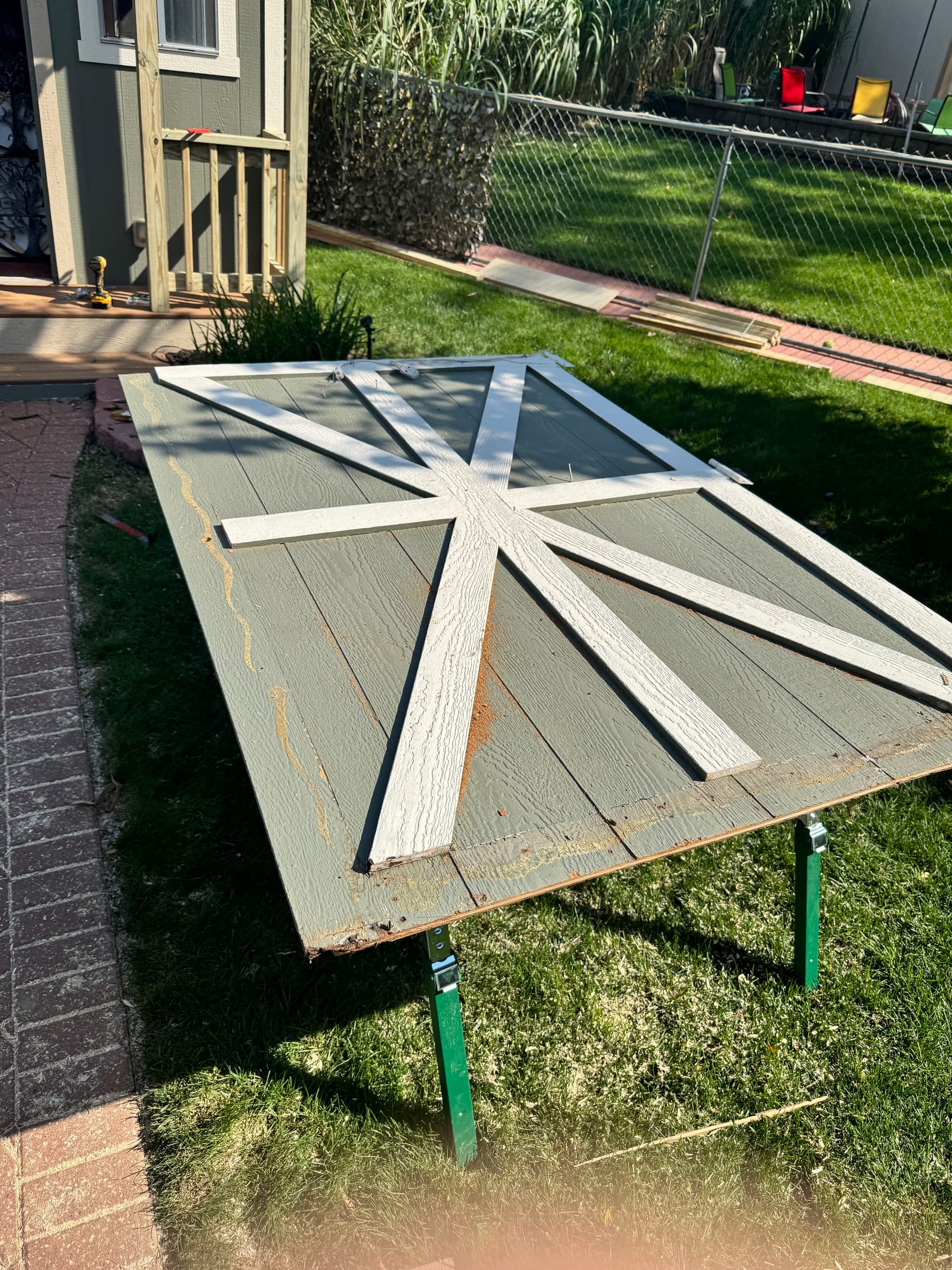
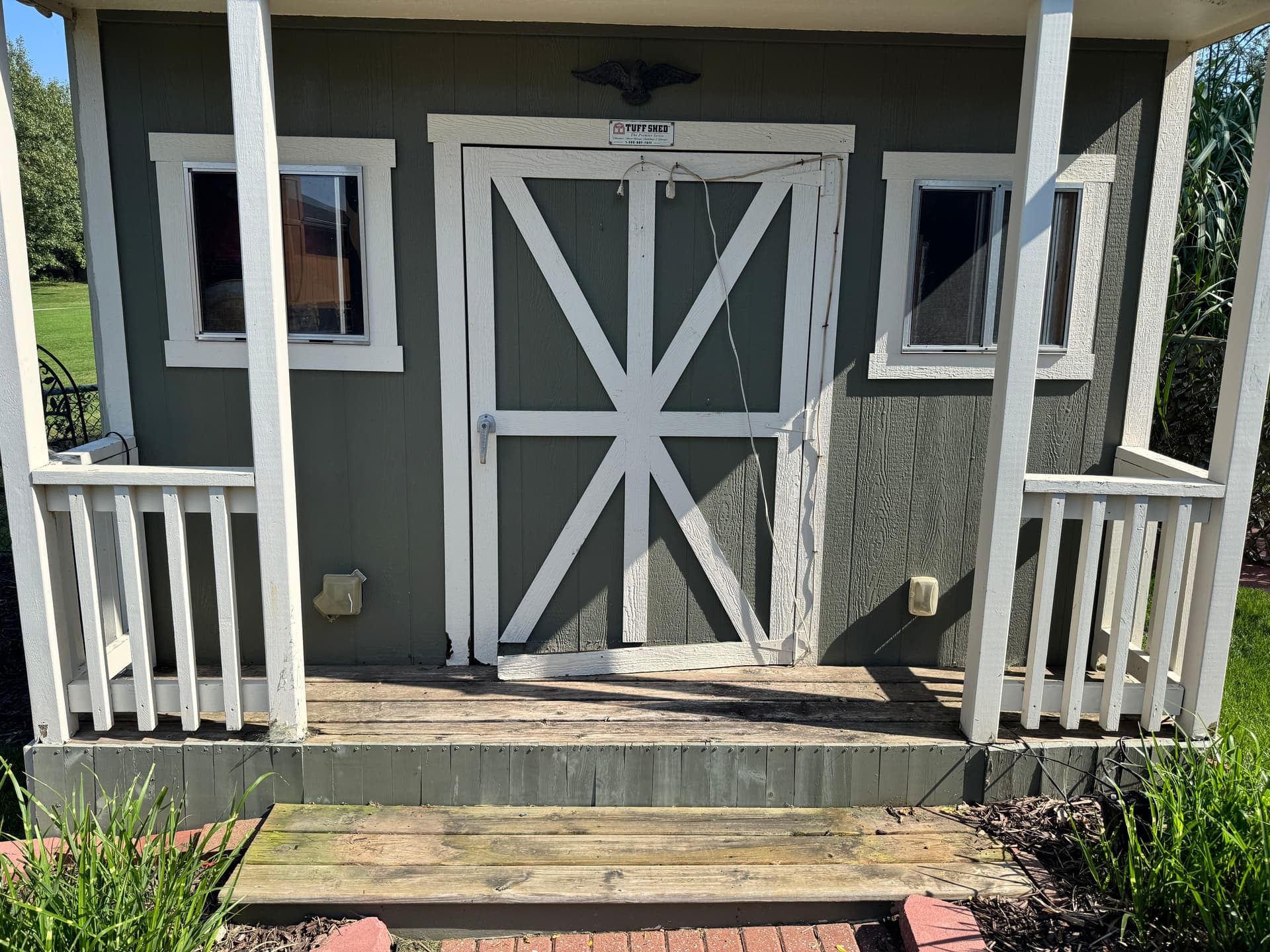
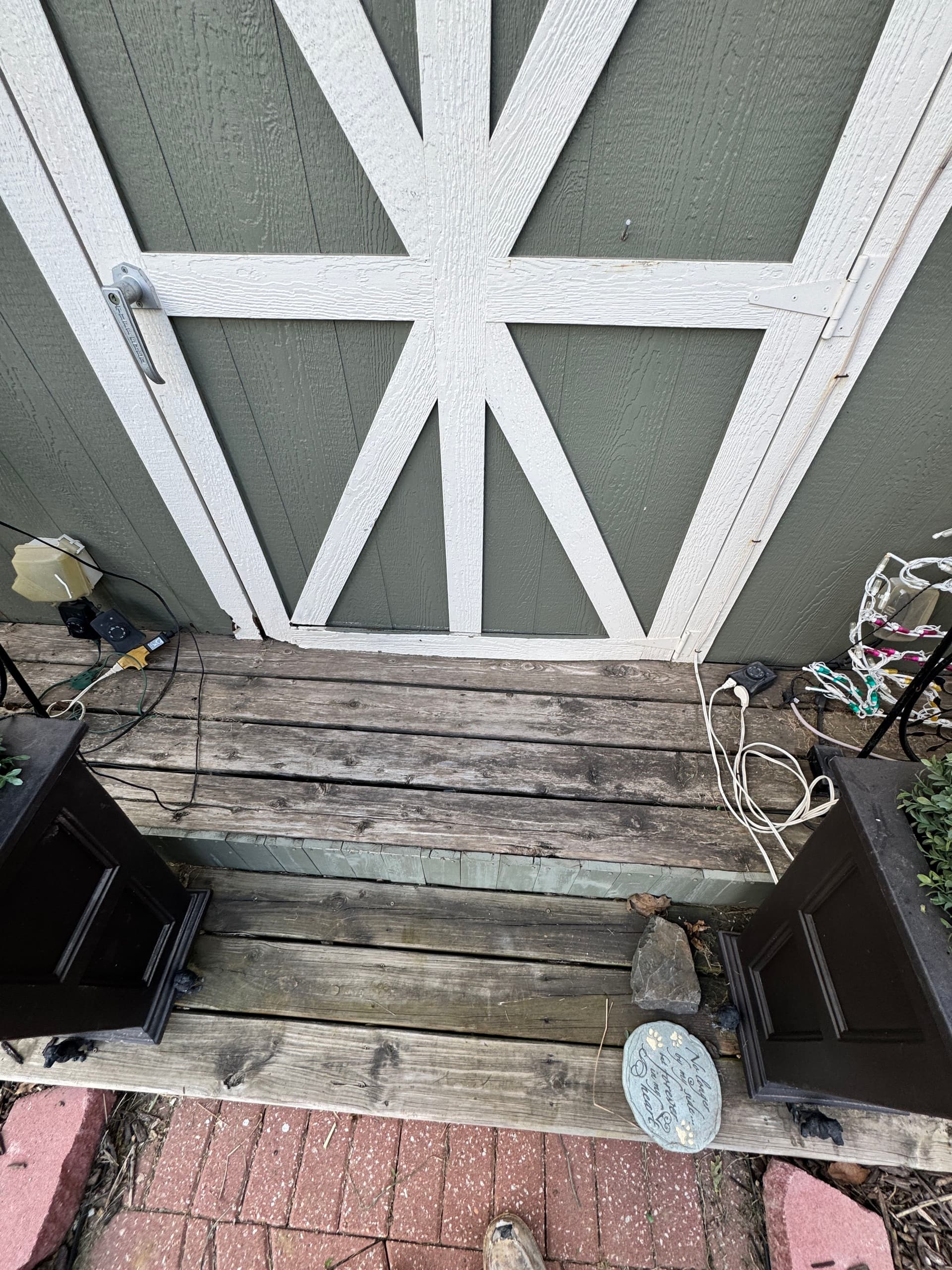
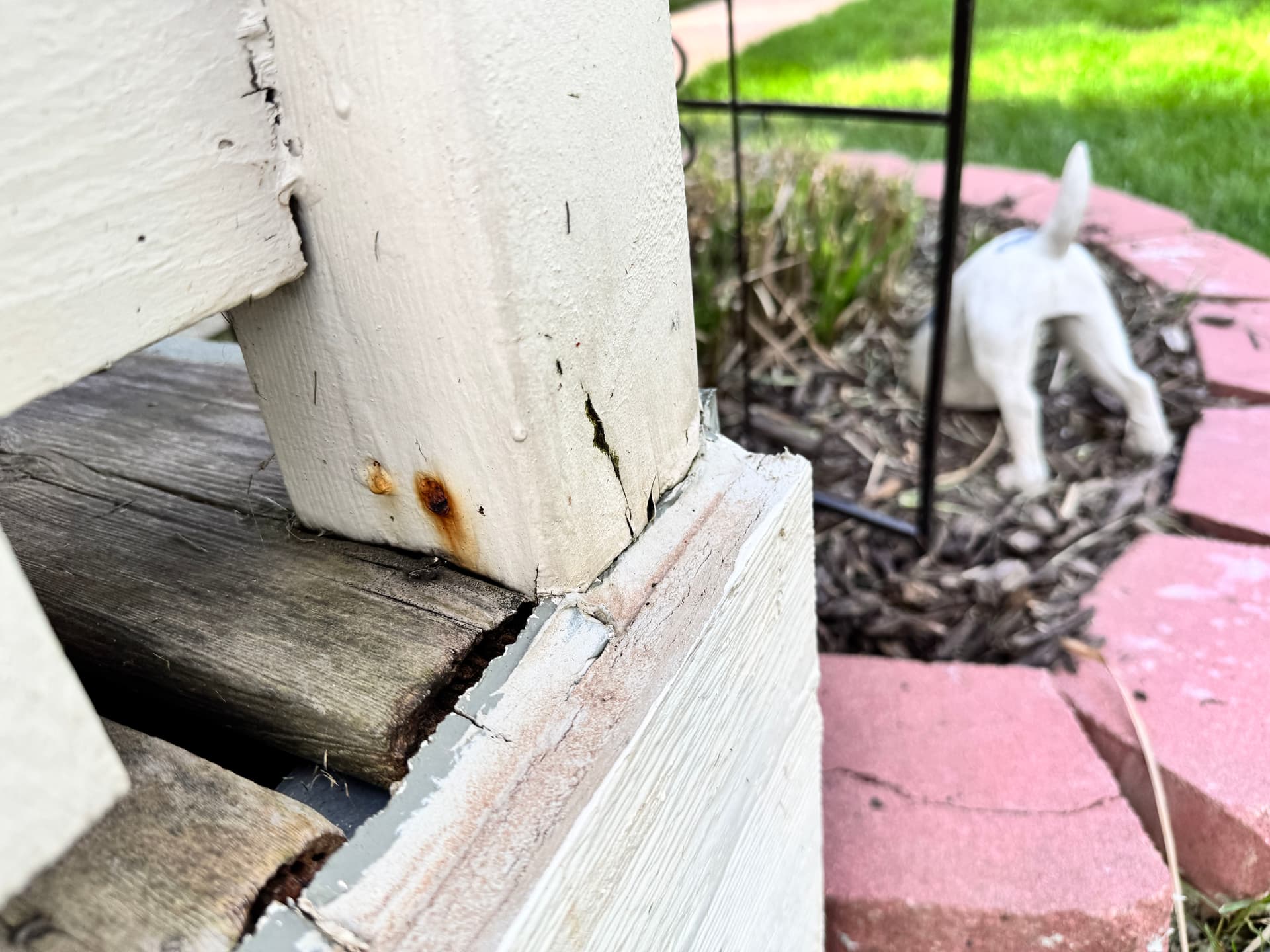
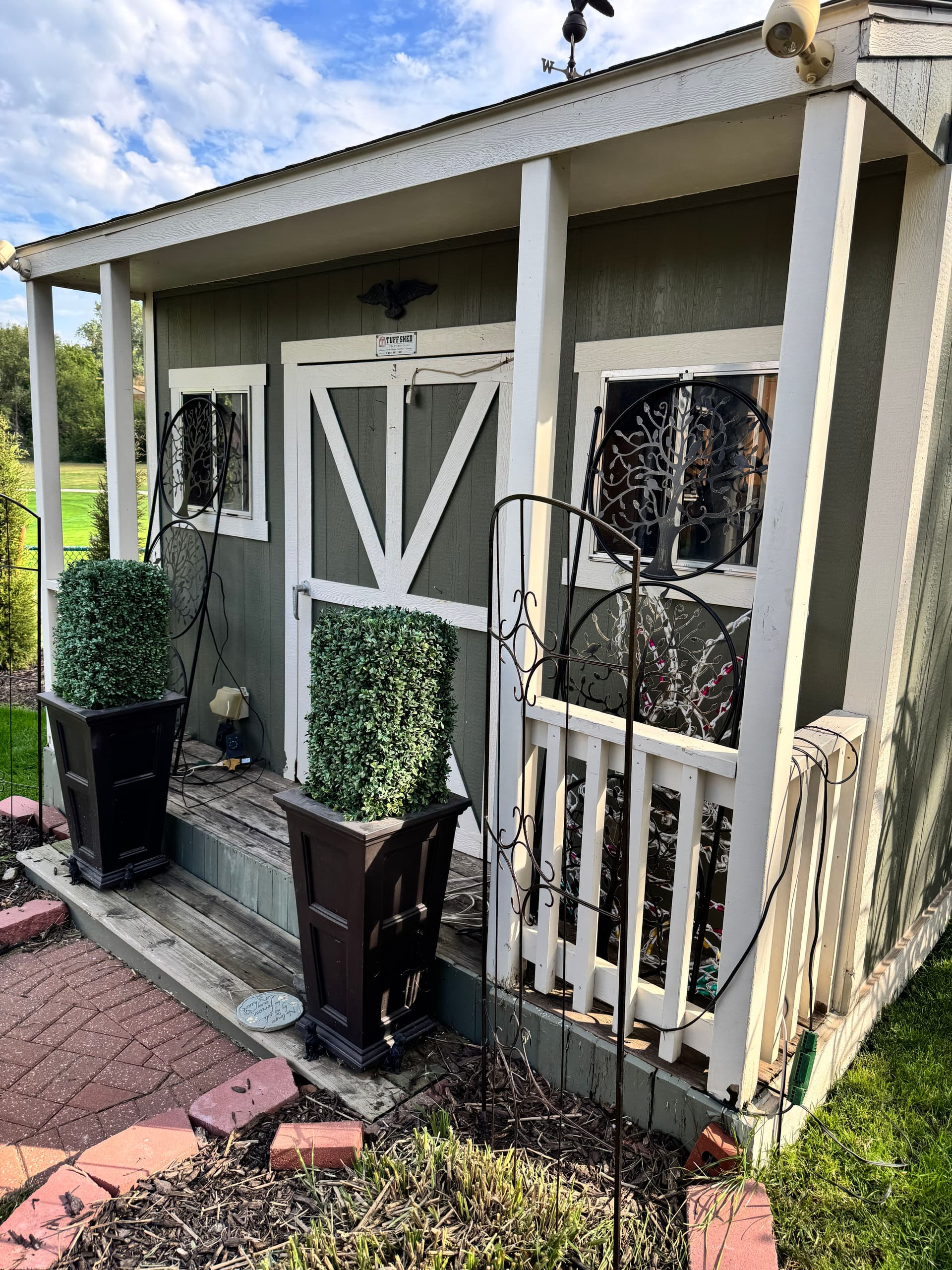
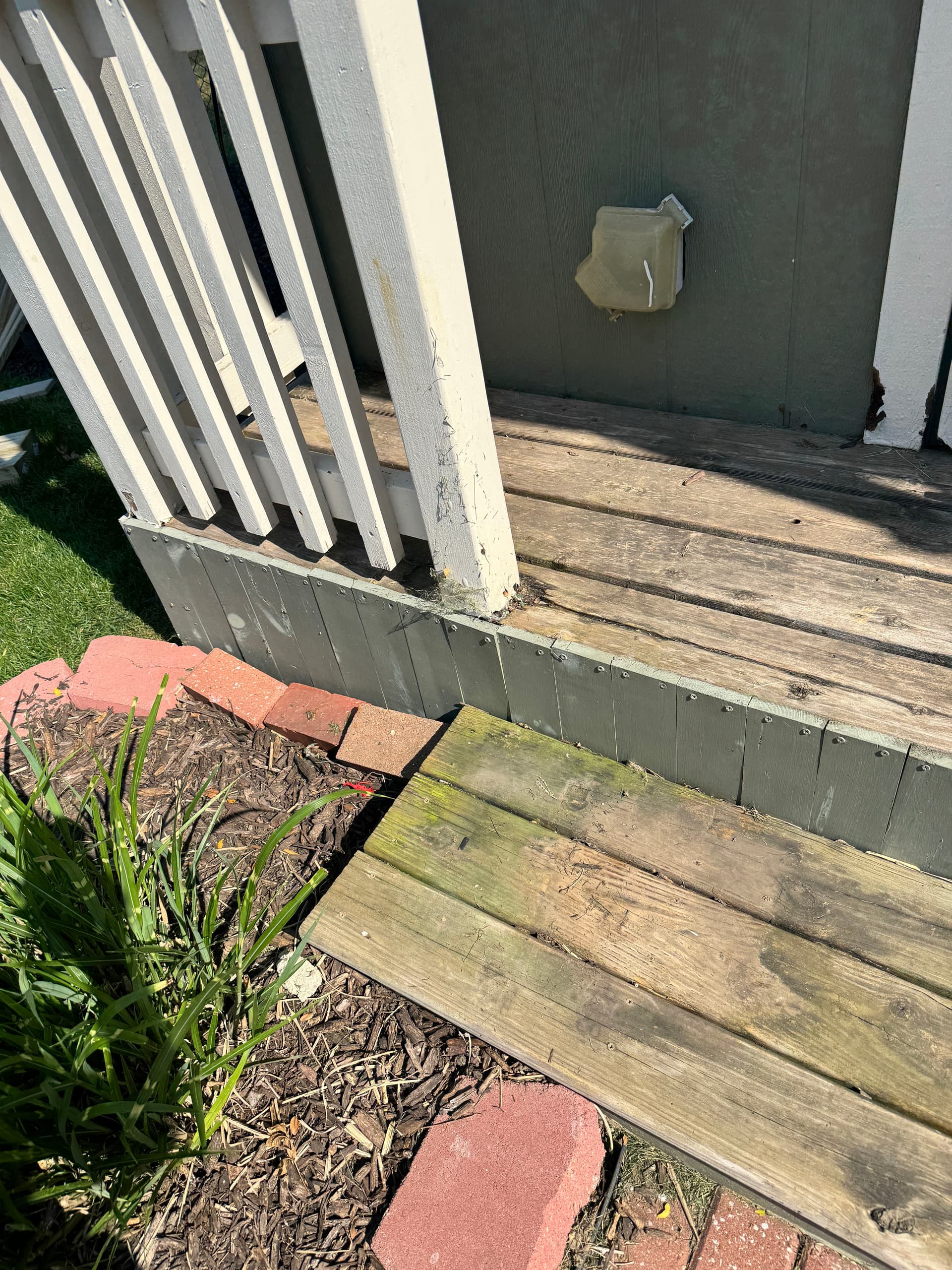
This shed had a good bones - but the wood wasn't holding up anymore. The deck boards were gray and cracking, the posts were showing rot at the base, and the trim had that soft, punky feel that tells you water has been winning for a while. Left alone, that kind of damage spreads fast and gets expensive.
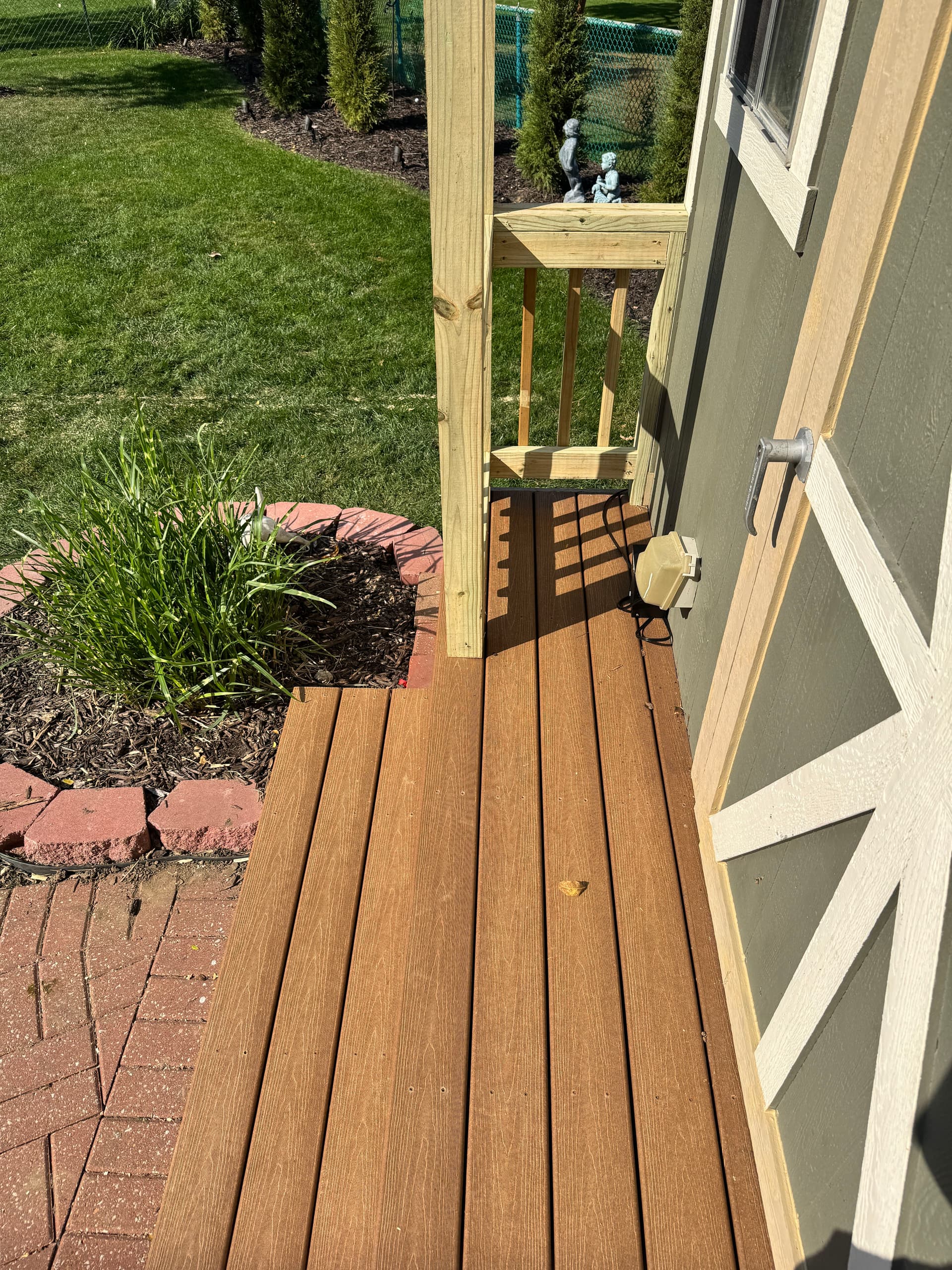
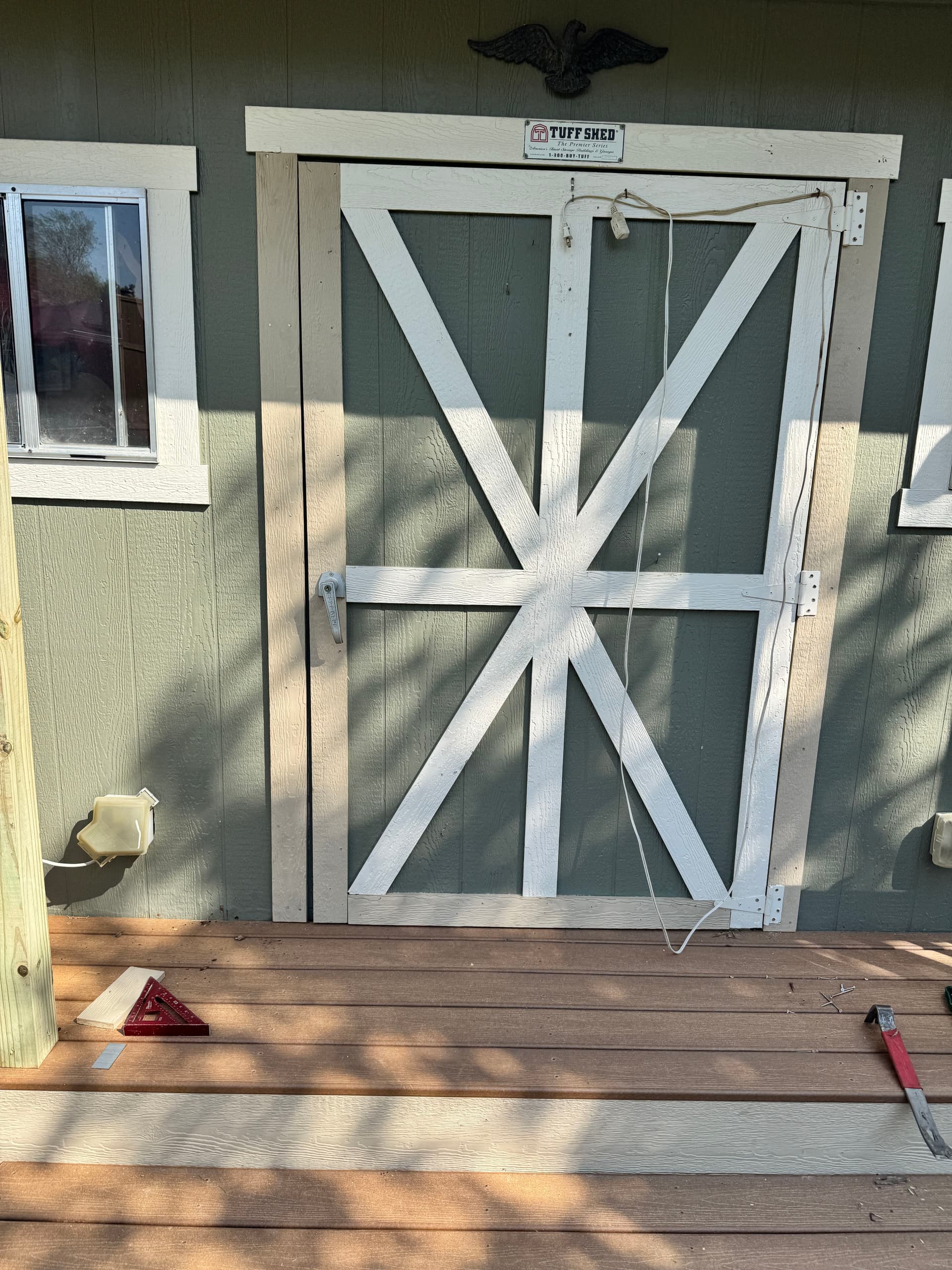
We pulled everything apart and started fresh where it counted. Rotted trim came off and got replaced with LP engineered trim - the kind that doesn't absorb moisture and won't need replacing again anytime soon. The old deck boards were swapped out for UltraDeck composite, which handles freeze-thaw cycles and daily foot traffic without warping or splitting. New posts went in where the originals had rotted through at the base.
We also ran new skirting across the front to close off the gap at the bottom of the porch. It's a small detail, but it keeps pests out and gives the whole front face a clean, finished look. Everything ties together now instead of looking patched.
This is the kind of work that sits right in our wheelhouse - exterior structures, deck work, and handyman repairs that go beyond slapping a coat of paint on the problem. We dig into what's actually failing and fix it the right way, with materials built to last.
A shed like this is worth saving. Replacing it costs a lot more than repairing it - and when the repair is done with quality materials and solid craftsmanship, you're not just buying time. You're buying years.